While many county clerks have been open and transparent, county clerks all over Wisconsin are mysteriously trying to stop a non-partisan grassroots effort to verify the recall election for Scott Walker, and one clerk is taking things to a whole new level. Friday, Waukesha County Clerk Kathy Nickolaus informed the Wisconsin Wave and the "Hand Count the Votes Now!" coalition that she plans to illegally destroy all ballots in Waukesha County before her results can be verified with a hand count. According to the Wisconsin Wave, she "threatened" to begin the malfeasance "as early as noon today."
After the Walker recall election, discrepancies in the results prompted the non-partisan grassroots coalition to begin hand counting ballots throughout Wisconsin with open records requests. Even though the exit polls released at the beginning of election night had the race in a very tight 50/50, the official results were an unusual deviation of 53/46 for Walker. Then during the recount in Racine County, citizen-observers double-checked the gubernatorial results in the county and found "statistically significant discrepancies" that gave Walker more votes in the official GAB results than were actually cast for him. For the past month, volunteers have been working hard to verify the integrity of the recall election and uncover any more issues.
Unfortunately, "Hand Count the Votes Now!" and Wisconsin Wave volunteers
have already uncovered many more "serious election integrity issues
including lax ballot bag security, widespread use of [illegal] unverifiable touch
screen voting machines, and most disturbingly, wards where the hand counts differ significantly from election night machine reported totals!"
Altering the results of an election and causing such discrepancies isn't as difficult as many people would have you believe. We saw many examples of these problems last year during the Wisconsin Supreme Court election of David Prosser. I've written many posts about the issues with Wisconsin's electronic election machines that allow one person to easily manipulate thousands of votes without detection. The only way we can be sure that something nefarious or accidental didn't happen to change the outcome of the recall election is to hand count the votes, something that is done in a very small number of Wisconsin counties.
Over the last two years, Wisconsin has been given many reasons to believe that some of our election equipment may have been circumvented. Unfortunately, we've been given very little to increase our confidence. Now, when we try to find answers for ourselves, public servants are standing in our way. County clerks who refuse to allow their ballots to be audited are failing their duty to their constituents.
Waukesha County itself has been an excellent demonstration of our failed policies, and the county continues to generate serious concerns. In July, an audit revealed that Kathy Nickolaus secretly changed the programming on the Waukesha County election equipment some time between certification and the April election, causing a failure in reporting during the election. Nickolaus confirmed she made a change but has refused to say what she changed, and it's not publicly known just how much of an involvement she had in the Walker recall election.
Now, Nickolaus is refusing to let Wisconsin know the true results of the recall election in Waukesha County. Not only is she refusing the legal open records request for access to the ballots, but she's threatening to destroy all evidence of the recall election in Waukesha County before the request process is even complete. While the law states that an appeal brought within 60 days of her refusal must be heard, she's making it clear how high the stakes are for her.
Nickolaus's threat only increases the justification for our concerns. If there is nothing to hide, why refuse the hand count? And what would bring someone to destroy records before an audit can take place? Kathy Nickolaus is definitely hiding something, and we must force her to show her cards before she destroys them!
The Wisconsin Wave is planning a rally today across the street from the Waukesha County government building from 11am-1pm to make it clear we mean business. If you're near Waukesha today, please consider joining the rally.
Call the GAB at (608) 266-8005 or email at gab@wi.gov to demand them to stop the destruction of ballots. If Nickolaus destroys the ballots, there is no way to find out what happened in Waukesha County.
Ballots from the recall election in at least 10 more counties will be counted over the next two weeks, but an additional 20-30 counties are in reach. Since this is a grassroots effort of people like you and me volunteering to count ballots, they really need volunteers and funds. While many county clerks are being reasonable, other county clerks are mysteriously charging unrealistically high fees in order to audit their ballots. So, the more funds the Wisconsin Wave can get, the better for the integrity of Wisconsin's elections.
For more information on the Hand Count the Votes Now! effort, see the Wisconsin Wave page.
If you want to help make sure there are no more undiscovered issues and ensure the integrity of our elections, please volunteer or contribute to the non-partisan grassroots effort at Wisconsin Wave. If there are undiscovered security lapses in our elections, we need to know and fix them. If someone has manipulated our elections, we need to know and prosecute them.
Update: At the last minute, Waukesha County thankfully announced that they will not be destroying the ballots.
"...an outlet for the voices of the people of Wisconsin, and a place for open, honest, fact-based debate."
Showing posts with label election fraud. Show all posts
Monday, August 13, 2012
Thursday, June 14, 2012
What's Wrong with Wisconsin's Electronic Voting Machines?
Tuesday, I wrote a blog post, "Voting Machine Verifications Show Walker Lost Recall Election," with a plausible story of how the recall election was stolen for Scott Walker by a malicious hacker. I wrote it in an effort to try to show how easily one or a few people can change hundreds of thousands of votes. The goal was to make you feel and then learn and take action to fix this incredibly scary problem.
The truth is that we have no way of knowing whether or not such election fraud occurred, because we don't use open source election equipment and don't have sufficient auditing and verification processes. We don't know for a fact that Walker won, as well as many Democrats, or any elected official for that mattter. The truth hurts, as can be seen from the comments at the end of that post.
All of the peer-reviewed computer security research agrees, no machine will ever be perfectly secure, and so we need to account for that. It's common knowledge to them and anyone with the equivalent knowledge of a bachelor's in computer science. It's time for it to become common knowledge in the general public.
The scarier thing, for all of us who currently have the knowledge to independently arrive at the same conclusions, we also have the knowledge and understanding to circumvent electronic voting equipment. That's thousands of Wisconsinites, including one Kathy Nickolaus. The likelihood that an election machine in Wisconsin has been compromised at some point is undeniably high.
A highly regarded computer security expert, Bruce Schneier, wrote an article about the problems with our electronic voting machines after the 2004 presidential election, but with the continued problems and lack of public awareness, the article deserves repeating. Schneier's article entitled "What's wrong with electronic voting machines?" is an overview with only a few technical details. It's written for broad consumption and reads well. If you want further information, follow his links embedded in the article, or visit his website or search Google for peer-reviewed computer security research.
Schneier's article follows as it appears here.
In the aftermath of the American presidential election on 2 November 2004, electronic voting machines are again in the news. Computerised machines lost votes, subtracted votes, and doubled some votes too.
And because many of these machines have no paper audit trails, a large number of votes will never be counted.
While it is unlikely that deliberate voting-machine fraud changed the result of this presidential election, the internet is buzzing ↑ with rumours and allegations ↑ in a number of different jurisdictions and races.
It is still too early to tell if any of these problems affected ↑ any individual state’s election, but the next few weeks will reveal whether any of the information crystallises into something significant.
The US has been here before. After the 2000 election, voting-machine problems made international headlines. The government appropriated money to fix the problems nationwide. Unfortunately, electronic voting machines – although presented as the solution – have largely made the problem worse.
This doesn’t mean that these machines should be abandoned, but they need to be designed ↑ to increase both their accuracy, and peoples’ trust in their accuracy.
This is difficult, but not impossible.
Before I discuss electronic voting machines, I need to explain why voting is so difficult. In my view, a voting system has four required characteristics:
But in the rush to improve speed and scalability, accuracy has been sacrificed. And to reiterate: accuracy is not how well the ballots are counted by, say, a punch-card reader. It’s not how the tabulating machine deals with hanging chads ↑ , pregnant chads, or anything like that. Accuracy is how well the process translates voter intent into appropriately counted votes.
Trust a computer to be inaccurate
Technology gets in the way of accuracy by adding steps. Each additional step means more potential errors, simply because no technology is perfect. Consider an optical-scan voting system. The voter fills in ovals on a piece of paper, which is fed into an optical-scan reader. The reader senses the filled-in ovals and tabulates the votes. This system has several steps: voter to ballot, to ovals, to optical reader, to vote tabulator, to centralised total.
At each step, errors can occur. If the ballot is confusing, some voters will fill in the wrong ovals. If a voter doesn’t fill them in properly, or if the reader is malfunctioning, then the sensor won’t sense the ovals properly. Mistakes in tabulation – either in the machine or when machine totals get aggregated into larger totals – also cause errors.
A manual system of tallying the ballots by hand, and then doing it again to double-check, is more accurate simply because there are fewer steps.
The error rates in modern systems can be significant. Some voting technologies have a 5% error rate, which means one in twenty people who vote using the system don’t have their votes counted. A system like this operates under the assumption that most of the time the errors don’t matter. If you consider that the errors are uniformly distributed – in other words, that they affect each candidate with equal probability – then they won’t affect the final outcome except in very close races.
So we’re willing to sacrifice accuracy to get a voting system that will handle large and complicated elections more quickly.
In close races, errors can affect the outcome, and that’s the point of a recount. A recount is an alternate system of tabulating votes: one that is slower (because it’s manual), simpler (because it just focuses on one race), and therefore more accurate.
Note that this is only true if everyone votes using the same machines. If parts of a town that tend to support candidate A use a voting system with a higher error rate than the voting system used in parts of town that tend to support candidate B, then the results will be skewed against candidate A.
With this background, the problem with computerised voting machines becomes clear. Actually, “computerised voting machines” is a bad choice of words. Many of today’s mechanical voting technologies involve computers too. Computers tabulate both punch-card and optical-scan machines.
The current debate centres on all-computer voting systems, primarily touch-screen systems, called Direct Record Electronic (DRE) machines (the voting system used in India’s May 2004 election – a computer with a series of buttons – is subject to the same issues).
In these systems the voter is presented with a list of choices on a screen, perhaps multiple screens if there are multiple elections, and he indicates his choice by touching the screen. As Daniel Tokaji points out, these machines are easy to use, produce final tallies immediately after the polls close, and can handle very complicated elections. They can also display instructions in different languages and allow for the blind or otherwise handicapped to vote without assistance.
They’re also more error-prone. The very same software that makes touch-screen voting systems so friendly also makes them inaccurate in the worst possible way.
‘Bugs’ or errors in software are commonplace, as any computer user knows. Computer programs regularly malfunction, sometimes in surprising and subtle ways. This is true for all software, including the software in computerised voting machines.
For example:
In Fairfax County, Virginia in 2003, a programming error in the electronic-voting machines caused them to mysteriously subtract 100 votes from one candidate’s totals.
In a 2003 election in Boone County, Iowa the electronic vote-counting equipment showed that more than 140,000 votes had been cast in the municipal elections, even though only half of the county’s 50,000 residents were eligible to vote.
In San Bernardino County, California in 2001, a programming error caused the computer to look for votes in the wrong portion of the ballot in 33 local elections, which meant that no votes registered on those ballots for that election. A recount was done by hand.
In Volusia County, Florida in 2000, an electronic voting machine gave Al Gore a final vote count of negative 16,022 votes.
There are literally hundreds of similar stories.
What’s important about these problems is not that they resulted in a less accurate tally, but that the errors were not uniformly distributed; they affected one candidate more than the other. This is evidence that you can’t assume errors will cancel each other out; you have to assume that any error will skew the results significantly and affect the result of the election.
And then there’s security
Another issue is that software can be ‘hacked’. That is, someone can deliberately introduce an error that modifies the result in favour of his preferred candidate.
This has nothing to do with whether the voting machines are hooked up to the internet on election day, as Daniel Tokaji seems to believe. The threat is that the computer code could be modified while it is being developed and tested, either by one of the programmers or a hacker who gains access to the voting-machine company’s network. It’s much easier to surreptitiously modify a software system than a hardware system, and it’s much easier to make these modifications undetectable.
Malicious changes or errors in the software can have far-reaching effects. A problem with a manual machine just affects that machine. A software problem, whether accidental or intentional, can affect many thousands of machines and skew the results of an entire election.
Some have argued in favour of touch-screen voting systems, citing the millions of dollars that are handled every day by ATMs and other computerised financial systems. That argument ignores another vital characteristic of voting systems: anonymity.
Computerised financial systems get most of their security from audit. If a problem is suspected, auditors can go back through the records of the system and figure out what happened. And if the problem turns out to be real, the transaction can be unwound and fixed. Because elections are anonymous, that kind of security just isn’t possible.
None of this means that we should abandon touch-screen voting; the benefits of DRE machines are too great to throw away. But it does mean that we need to recognise the limitations, and design systems that can be accurate despite them.
Computer security experts are unanimous on what to do (some voting experts disagree, but it is the computer security experts who need to be listened to; the problems here are with the computer, not with the fact that the computer is being used in a voting application). They have two recommendations, echoed by Siva Vaidhyanathan:
The auditing that is conducted on slot machine software in the US is significantly more meticulous ↑ than that applied to voting software. The development process for mission-critical airplane software makes voting software look like a slapdash affair. If we care about the integrity of our elections, this has to change.
Proponents of DREs often point to successful elections as “proof” that the systems work. That completely misses the point. The fear is that errors in the software – either accidental or deliberately introduced – can undetectably alter the final tallies. An election without any detected problems is no more a proof that the system is reliable and secure, than a night that no one broke into your house is proof that your locks work. Maybe no one tried to break in, or maybe someone tried and succeeded – and you don’t know it.
Even if we get the technology right, we still won’t be finished. If the goal of a voting system is to accurately translate voter intent into a final tally, the voting machine itself is only one part of the overall system. In the 2004 US election, problems with voter registration, untrained poll workers, ballot design, and procedures for handling problems, resulted in far more votes being left uncounted than problems with technology.
If we’re going to spend money on new voting technology, it makes sense to spend it on technology that makes the problem easier instead of harder.
The truth is that we have no way of knowing whether or not such election fraud occurred, because we don't use open source election equipment and don't have sufficient auditing and verification processes. We don't know for a fact that Walker won, as well as many Democrats, or any elected official for that mattter. The truth hurts, as can be seen from the comments at the end of that post.
All of the peer-reviewed computer security research agrees, no machine will ever be perfectly secure, and so we need to account for that. It's common knowledge to them and anyone with the equivalent knowledge of a bachelor's in computer science. It's time for it to become common knowledge in the general public.
The scarier thing, for all of us who currently have the knowledge to independently arrive at the same conclusions, we also have the knowledge and understanding to circumvent electronic voting equipment. That's thousands of Wisconsinites, including one Kathy Nickolaus. The likelihood that an election machine in Wisconsin has been compromised at some point is undeniably high.
A highly regarded computer security expert, Bruce Schneier, wrote an article about the problems with our electronic voting machines after the 2004 presidential election, but with the continued problems and lack of public awareness, the article deserves repeating. Schneier's article entitled "What's wrong with electronic voting machines?" is an overview with only a few technical details. It's written for broad consumption and reads well. If you want further information, follow his links embedded in the article, or visit his website or search Google for peer-reviewed computer security research.
Schneier's article follows as it appears here.
In the aftermath of the American presidential election on 2 November 2004, electronic voting machines are again in the news. Computerised machines lost votes, subtracted votes, and doubled some votes too.
And because many of these machines have no paper audit trails, a large number of votes will never be counted.
While it is unlikely that deliberate voting-machine fraud changed the result of this presidential election, the internet is buzzing ↑ with rumours and allegations ↑ in a number of different jurisdictions and races.
It is still too early to tell if any of these problems affected ↑ any individual state’s election, but the next few weeks will reveal whether any of the information crystallises into something significant.
The US has been here before. After the 2000 election, voting-machine problems made international headlines. The government appropriated money to fix the problems nationwide. Unfortunately, electronic voting machines – although presented as the solution – have largely made the problem worse.
This doesn’t mean that these machines should be abandoned, but they need to be designed ↑ to increase both their accuracy, and peoples’ trust in their accuracy.
This is difficult, but not impossible.
Before I discuss electronic voting machines, I need to explain why voting is so difficult. In my view, a voting system has four required characteristics:
- Accuracy. The goal of any voting system is to establish the intent of each individual voter, and translate those intents into a final tally. To the extent that a voting system fails to do this, it is undesirable. This characteristic also includes security: It should be impossible to change someone else’s vote, stuff ballots, destroy votes, or otherwise affect the accuracy of the final tally.
- Anonymity. Secret ballots are fundamental to democracy, and voting systems must be designed to facilitate voter anonymity.
- Scalability. Voting systems need to be able to handle very large elections. Nearly 120 million people voted in the US presidential election. About 372 million people voted in India’s May 2004 national elections, and over 115 million in Brazil’s October 2004 local elections. The complexity of an election is another issue. Unlike in many countries where the national election is a single vote for a person or a party, a United States voter is faced with dozens of individual election decisions: national, local, and everything in between.
- Speed. Voting systems should produce results quickly. This is particularly important in the United States, where people expect to learn the results of the day’s election before bedtime.
But in the rush to improve speed and scalability, accuracy has been sacrificed. And to reiterate: accuracy is not how well the ballots are counted by, say, a punch-card reader. It’s not how the tabulating machine deals with hanging chads ↑ , pregnant chads, or anything like that. Accuracy is how well the process translates voter intent into appropriately counted votes.
Trust a computer to be inaccurate
Technology gets in the way of accuracy by adding steps. Each additional step means more potential errors, simply because no technology is perfect. Consider an optical-scan voting system. The voter fills in ovals on a piece of paper, which is fed into an optical-scan reader. The reader senses the filled-in ovals and tabulates the votes. This system has several steps: voter to ballot, to ovals, to optical reader, to vote tabulator, to centralised total.
At each step, errors can occur. If the ballot is confusing, some voters will fill in the wrong ovals. If a voter doesn’t fill them in properly, or if the reader is malfunctioning, then the sensor won’t sense the ovals properly. Mistakes in tabulation – either in the machine or when machine totals get aggregated into larger totals – also cause errors.
A manual system of tallying the ballots by hand, and then doing it again to double-check, is more accurate simply because there are fewer steps.
The error rates in modern systems can be significant. Some voting technologies have a 5% error rate, which means one in twenty people who vote using the system don’t have their votes counted. A system like this operates under the assumption that most of the time the errors don’t matter. If you consider that the errors are uniformly distributed – in other words, that they affect each candidate with equal probability – then they won’t affect the final outcome except in very close races.
So we’re willing to sacrifice accuracy to get a voting system that will handle large and complicated elections more quickly.
In close races, errors can affect the outcome, and that’s the point of a recount. A recount is an alternate system of tabulating votes: one that is slower (because it’s manual), simpler (because it just focuses on one race), and therefore more accurate.
Note that this is only true if everyone votes using the same machines. If parts of a town that tend to support candidate A use a voting system with a higher error rate than the voting system used in parts of town that tend to support candidate B, then the results will be skewed against candidate A.
With this background, the problem with computerised voting machines becomes clear. Actually, “computerised voting machines” is a bad choice of words. Many of today’s mechanical voting technologies involve computers too. Computers tabulate both punch-card and optical-scan machines.
The current debate centres on all-computer voting systems, primarily touch-screen systems, called Direct Record Electronic (DRE) machines (the voting system used in India’s May 2004 election – a computer with a series of buttons – is subject to the same issues).
In these systems the voter is presented with a list of choices on a screen, perhaps multiple screens if there are multiple elections, and he indicates his choice by touching the screen. As Daniel Tokaji points out, these machines are easy to use, produce final tallies immediately after the polls close, and can handle very complicated elections. They can also display instructions in different languages and allow for the blind or otherwise handicapped to vote without assistance.
They’re also more error-prone. The very same software that makes touch-screen voting systems so friendly also makes them inaccurate in the worst possible way.
‘Bugs’ or errors in software are commonplace, as any computer user knows. Computer programs regularly malfunction, sometimes in surprising and subtle ways. This is true for all software, including the software in computerised voting machines.
For example:
In Fairfax County, Virginia in 2003, a programming error in the electronic-voting machines caused them to mysteriously subtract 100 votes from one candidate’s totals.
In a 2003 election in Boone County, Iowa the electronic vote-counting equipment showed that more than 140,000 votes had been cast in the municipal elections, even though only half of the county’s 50,000 residents were eligible to vote.
In San Bernardino County, California in 2001, a programming error caused the computer to look for votes in the wrong portion of the ballot in 33 local elections, which meant that no votes registered on those ballots for that election. A recount was done by hand.
In Volusia County, Florida in 2000, an electronic voting machine gave Al Gore a final vote count of negative 16,022 votes.
There are literally hundreds of similar stories.
What’s important about these problems is not that they resulted in a less accurate tally, but that the errors were not uniformly distributed; they affected one candidate more than the other. This is evidence that you can’t assume errors will cancel each other out; you have to assume that any error will skew the results significantly and affect the result of the election.
And then there’s security
Another issue is that software can be ‘hacked’. That is, someone can deliberately introduce an error that modifies the result in favour of his preferred candidate.
This has nothing to do with whether the voting machines are hooked up to the internet on election day, as Daniel Tokaji seems to believe. The threat is that the computer code could be modified while it is being developed and tested, either by one of the programmers or a hacker who gains access to the voting-machine company’s network. It’s much easier to surreptitiously modify a software system than a hardware system, and it’s much easier to make these modifications undetectable.
Malicious changes or errors in the software can have far-reaching effects. A problem with a manual machine just affects that machine. A software problem, whether accidental or intentional, can affect many thousands of machines and skew the results of an entire election.
Some have argued in favour of touch-screen voting systems, citing the millions of dollars that are handled every day by ATMs and other computerised financial systems. That argument ignores another vital characteristic of voting systems: anonymity.
Computerised financial systems get most of their security from audit. If a problem is suspected, auditors can go back through the records of the system and figure out what happened. And if the problem turns out to be real, the transaction can be unwound and fixed. Because elections are anonymous, that kind of security just isn’t possible.
None of this means that we should abandon touch-screen voting; the benefits of DRE machines are too great to throw away. But it does mean that we need to recognise the limitations, and design systems that can be accurate despite them.
Computer security experts are unanimous on what to do (some voting experts disagree, but it is the computer security experts who need to be listened to; the problems here are with the computer, not with the fact that the computer is being used in a voting application). They have two recommendations, echoed by Siva Vaidhyanathan:
- DRE machines must have a voter-verifiable paper audit trails (sometimes called a voter-verified paper ballot). This is a paper ballot printed out by the voting machine, which the voter is allowed to look at and verify. He doesn’t take it home with him. Either he looks at it on the machine behind a glass screen, or he takes the paper and puts it into a ballot box. The point of this is twofold: it allows the voter to confirm that his vote was recorded in the manner he intended, and it provides the mechanism for a recount if there are problems with the machine.
- Software used on DRE machines must be open ↑ to public scrutiny. This also has two functions: it allows any interested party to examine the software and find bugs, which can then be corrected, a public analysis that improves security; and it increases public confidence in the voting process - if the software is public, no one can insinuate that the voting system has unfairness built into the code (companies that make these machines regularly argue that they need to keep their software secret for security reasons. Don’t believe ↑ them. In this instance, secrecy has nothing to do with security).
The auditing that is conducted on slot machine software in the US is significantly more meticulous ↑ than that applied to voting software. The development process for mission-critical airplane software makes voting software look like a slapdash affair. If we care about the integrity of our elections, this has to change.
Proponents of DREs often point to successful elections as “proof” that the systems work. That completely misses the point. The fear is that errors in the software – either accidental or deliberately introduced – can undetectably alter the final tallies. An election without any detected problems is no more a proof that the system is reliable and secure, than a night that no one broke into your house is proof that your locks work. Maybe no one tried to break in, or maybe someone tried and succeeded – and you don’t know it.
Even if we get the technology right, we still won’t be finished. If the goal of a voting system is to accurately translate voter intent into a final tally, the voting machine itself is only one part of the overall system. In the 2004 US election, problems with voter registration, untrained poll workers, ballot design, and procedures for handling problems, resulted in far more votes being left uncounted than problems with technology.
If we’re going to spend money on new voting technology, it makes sense to spend it on technology that makes the problem easier instead of harder.
Tuesday, June 12, 2012
Voting Machine Verifications Show Walker Lost Recall Election
The required verification of Wisconsin's electronic voting equipment after elections has shown that election fraud occurred in several counties during Scott Walker's recall election. The corrected election results show that Barrett won with 51% of the vote, matching the percentage of voters that voted for Democratic Senator John Lehman and favoring President Obama in the exit polls as well as more closely matching the 50/50 split exit polls for Walker and Barrett. It turns out that it wasn't the exit polls that needed to be adjusted, it was the election results.
As one of the first steps in the canvassing process after an election, each electronic voting machine and ballot counting machine is verified for its integrity. The post-election verification process is the same as the pre-election verification process. First, the integrity of the software on each machine is verified, and if the verification fails, it's assumed the machine was tampered with. If the machine passes, the function of the machine is tested. For optical scanners, election officials run a number of randomly selected completed paper ballots through the scanner and match the totals against a hand-count. For touchscreen voting machines, election officials repeat a number of votes from a random position in the paper log and match the totals against a hand-count. The machine has been compromised if the totals don't match.
The verification of the open software installed on the equipment uncovered nearly 100 machines across Wisconsin that had been compromised. It's believed that at least one person, most likely two or three, compromised the optical scanners after the pre-election verification by connecting a small device to the diagnostic port on the machine which automatically downloaded the modified software. The software only affected the gubernatorial election, which explains Lehman's win.
All of the votes counted with the compromised machines were recounted by verified machines or hand count, and the recounts show that 110,805 Barrett votes had been wrongfully switched to Walker by the compromised machines. It appears as though the modified software flipped Barrett votes at random short durations of time, so the modified software changed vote totals differently across machines. Outagamie County had the largest percentage of switched votes with 7,741 votes, 10% of the total votes in the county, but Walker still won the county nearly as much as he did in 2010. Milwaukee County had the largest number of flipped votes with 31,154, followed by Dane County with 10,682 flipped votes. The other counties with modified software were Brown, Calumet, Dodge, Door, Kewaunee, Kenosha, Marathon, Manitowac, Oconto, Racine, Shawano, and Winnebago. Interestingly, nearly every county is along Highway 41 or very close.
Since we control the open software on the machines, we can quickly plug the security hole at no cost to taxpayers for both detection and the fix. Several Wisconsin software engineers wrote a fix for the problem within a few hours of the announcement by the Government Accountability Board, and the new software will go through a number of tests before it's certified. Rest assured, our voting machines will be fixed and certified long before the next election thanks to it being open source software.
As a truly bipartisan measure, Scott Walker reportedly asked Tom Barrett to attend the brats and beers today. Walker conceded, "We have yet to determine who tampered with the equipment, but I'll relinquish my command to the rightful Governor of Wisconsin, Tom Barrett." The person(s) responsible for tampering with election equipment and swinging the election are still being investigated.
Unfortunately, someone may have tampered with voting equipment during the recall election, but we'll never be able to find out. Nearly everything above is just a dream. Voting machines are not open and are not verified after elections, and so there is no way to detect such election fraud. None of the precautions listed above are actually done in Wisconsin, but the possibility of someone swinging an election by tampering with voting machines so easily is real. Barrett could really have won with 51%, but we'll never know.
I'm very sorry if that was painful, but I hope it was effective in convincing you how important this issue is. It's a far more critical issue than voter fraud. We have no proof whether or not Walker really survived his recall, but we could. The next time a Democrat wins a big election, you can bet the Republicans will be shouting election fraud, knowing the problem exists but refusing to do anything about it. Lets get this fixed now.
I wrote a blog post following the Prosser/Kloppenburg election detailing the issues with our elections and the solutions available. By fixing these issues, we could detect and compensate for election fraud, and the story above could be a reality. The following is a minor update to the post, putting it into the context of this election.
Our most pressing issues with elections in Wisconsin continue to be:
As one of the first steps in the canvassing process after an election, each electronic voting machine and ballot counting machine is verified for its integrity. The post-election verification process is the same as the pre-election verification process. First, the integrity of the software on each machine is verified, and if the verification fails, it's assumed the machine was tampered with. If the machine passes, the function of the machine is tested. For optical scanners, election officials run a number of randomly selected completed paper ballots through the scanner and match the totals against a hand-count. For touchscreen voting machines, election officials repeat a number of votes from a random position in the paper log and match the totals against a hand-count. The machine has been compromised if the totals don't match.
The verification of the open software installed on the equipment uncovered nearly 100 machines across Wisconsin that had been compromised. It's believed that at least one person, most likely two or three, compromised the optical scanners after the pre-election verification by connecting a small device to the diagnostic port on the machine which automatically downloaded the modified software. The software only affected the gubernatorial election, which explains Lehman's win.
All of the votes counted with the compromised machines were recounted by verified machines or hand count, and the recounts show that 110,805 Barrett votes had been wrongfully switched to Walker by the compromised machines. It appears as though the modified software flipped Barrett votes at random short durations of time, so the modified software changed vote totals differently across machines. Outagamie County had the largest percentage of switched votes with 7,741 votes, 10% of the total votes in the county, but Walker still won the county nearly as much as he did in 2010. Milwaukee County had the largest number of flipped votes with 31,154, followed by Dane County with 10,682 flipped votes. The other counties with modified software were Brown, Calumet, Dodge, Door, Kewaunee, Kenosha, Marathon, Manitowac, Oconto, Racine, Shawano, and Winnebago. Interestingly, nearly every county is along Highway 41 or very close.
Since we control the open software on the machines, we can quickly plug the security hole at no cost to taxpayers for both detection and the fix. Several Wisconsin software engineers wrote a fix for the problem within a few hours of the announcement by the Government Accountability Board, and the new software will go through a number of tests before it's certified. Rest assured, our voting machines will be fixed and certified long before the next election thanks to it being open source software.
As a truly bipartisan measure, Scott Walker reportedly asked Tom Barrett to attend the brats and beers today. Walker conceded, "We have yet to determine who tampered with the equipment, but I'll relinquish my command to the rightful Governor of Wisconsin, Tom Barrett." The person(s) responsible for tampering with election equipment and swinging the election are still being investigated.
Unfortunately, someone may have tampered with voting equipment during the recall election, but we'll never be able to find out. Nearly everything above is just a dream. Voting machines are not open and are not verified after elections, and so there is no way to detect such election fraud. None of the precautions listed above are actually done in Wisconsin, but the possibility of someone swinging an election by tampering with voting machines so easily is real. Barrett could really have won with 51%, but we'll never know.
I'm very sorry if that was painful, but I hope it was effective in convincing you how important this issue is. It's a far more critical issue than voter fraud. We have no proof whether or not Walker really survived his recall, but we could. The next time a Democrat wins a big election, you can bet the Republicans will be shouting election fraud, knowing the problem exists but refusing to do anything about it. Lets get this fixed now.
I wrote a blog post following the Prosser/Kloppenburg election detailing the issues with our elections and the solutions available. By fixing these issues, we could detect and compensate for election fraud, and the story above could be a reality. The following is a minor update to the post, putting it into the context of this election.
Our most pressing issues with elections in Wisconsin continue to be:
- Ballot security and integrity
- Antiquated unsupported voting equipment
- Insecure and inaccurate voting equipment
- Voting equipment hardware design and software not open, owned and controlled by the people of Wisconsin
- The integrity of every voting machine isn't verified before and after every election
- Various vote-tallying processes are not open
- Ease and likelihood of errors in reporting
- Voting equipment and software is not uniform across the state
(1) Ballot security and integrity. There were many unsealed and ripped ballot bags during the Prosser/Kloppenburg election. Nothing was done to prevent this from occurring in future elections. The only reason we knew about these issues was because of the recount and the ability to watch some online. There could be far more issues than we are aware of from other elections.
(2) Antiquated unsupported voting equipment. The Prosser/Kloppenburg recount showed us that at least one approved model of our voting equipment, the Optech Eagle, is antiquated and must be removed from service. The original vote tallies from that election had to be deleted, against the law, in order to carry out the recount with the machines, because there were not enough memory packs and those memory packs are no longer manufactured. Although, I will say that I believe it's good that the issue forced a hand recount in parts of the state instead of simply re-feeding the ballots back through the same machines for a recount. This model should be replaced quickly, though the following issues may warrant some delay. A full review of all our voting equipment should occur first.
(3) Insecure and inaccurate voting equipment. Our electronic voting equipment is insecure and inaccurate, but you're not supposed to know that. The very equipment we use to cast and count votes can be manipulated without detection in seconds, swinging the results by any number of votes. There's not a single computer or security expert that would argue with that. However, even if tampering doesn't occur, our vote-tallying machines rarely count the exact number of votes. These are inevitable consequences of using electronics to cast and count our votes. Unfortunately, the design of our electronic voting machines and their margins of error are secrets kept tightly by their manufacturers. So we have no way of knowing just how insecure and inaccurate our machines are (more on this in (4)).
Quite near anyone with the knowledge to write moderately sophisticated computer programs can manipulate a voting machine and its vote tally in literally seconds. That's well into the tens of thousands if not hundreds of thousands of people in Wisconsin with that ability. Not at any other point in our country's history do so many people have such an ability to swing elections so dramatically. It really does take some time to stop and consider.
No one has any "bullet-proof" solutions to this problem, and it's likely we never will. If we want to count votes using electronic equipment, and I for one think it's a "good thing," we must have verifiable guarantees of voting machine security and accuracy. We don't have that now, and we almost certainly won't have that until we solve (4).
There are other issues regarding accuracy specific to the voting machines we use. A GAB memo from December 2009 shows that there were several issues with voting machines that we currently use in many parts of Wisconsin. An error message "error while printing" occurred 15% of the time during a test of the AutoMARK VAT. This was due to a malfunction in the system which required replacement, and the replacement had similar non-tallying related issues about 5% of the time. Such errors can cause inaccuracies, and they can also cause voter disenfranchisement as voters may be told to come back later or may have to wait for an excessive period of time.
The AutoMARK VAT is used as an option for voters with disabilities in many municipalities across Wisconsin. However, the GAB memo says that the testing by the GAB and testing by the Wisconsin Election Administration Council shows that
Another machine mentioned in the memo with issues regarding its ease of use is the intElect DS200. It may not be immediately clear that these issues are issues with accuracy. Any time a voter's intention doesn't get correctly included in the official results, the system is inaccurate. The more difficult a machine is to use, the less accurate it will be.
Similar touch-screen machines continue to have worrisome issues in other states as well. In the 2010 election, a touch-screen voting machine in Pennsylvania began casting votes for the opposite candidate from the one selected by the voter, and the machine required "recalibration" to resolve. We don't use the same machine here, but the same manufacturer, ES&S. So there's good reason to suspect the same issues can and may have happened here. Luckily for us, all of our touch-screens mark or print a paper ballot, but most people expect the machines won't make a mistake. So they may not properly inspect the results before casting their vote and walking away.
The GAB incorrectly states on their website "Adminstrative(sp) Code Chapter 5 Ballot and Electronic Voting Equipment Security insures all electronic voting systems used in Wisconsin are accurate and reliable." This is plain false, and it provides a false sense of security to those voters who aren't aware of the issues. I don't believe we will ever fully be able to insure electronic voting systems are accurate and reliable, but I believe we could publicly guarantee much higher security, accuracy and reliability if we solved issue (4).
Wisconsin does have some of the best electronic voting machine laws in the country, but they're far from perfect. What's worse is that at any time the GAB can exempt a machine from complying with Wisconsin law. The GAB can exempt a voting machine from Wisconsin law if they choose, or as they say, "for good cause" GAB 7.03(5). I don't see how exempting a voting machine from Wisconsin law is a good idea at any time for any reason.
(4) Voting equipment design not owned by the people of Wisconsin. When I say that the people of Wisconsin should own the designs for our voting equipment I mean that the hardware designs and the software source code should be open, i.e., in the public domain. I'll elaborate more on this in the solutions section later, but I'll briefly cover some highlights and comparisons now.
The manufacturers of our voting machines will never provide us with the information and control we need to conduct our elections in the most fair, open and transparent way. The people who run our elections, like your county clerk, have no control or idea of what's going on inside our voting machines. (They can, but I'm not sure who's gone through the trouble s.5.905(5).) It doesn't appear as though anyone from the state government or the Wisconsin public has inspected the code or designs of these machines. We're just expected to have blind faith in these systems, but we know the manufacturers can't and/or won't solve all of their problems.
Currently, certain portions of the software for every electronic voting machine model approved for use in Wisconsin is stored in an escrow s.5.905(2). It's unclear if every software version in use is stored in the escrow, and we have no way of knowing how much of any particular software is stored. The GAB most likely knows the exact components, but they don't make the information available on their website as they should. This escrow provision is meant to make us feel better about the insecure proprietary software, but it does little or nothing to increase the security of our voting equipment. We need all of the software components at the very least, and even that won't provide us with the security, accuracy and reliability that we could achieve with open voting equipment.
Even if the manufacturers gave public access to the design and software of their voting machines, we won't get the full value of an open system if the hardware designs and software source code aren't in the public domain. We wouldn't necessarily be able to ensure the integrity of a voting machine simply because we have that information, because the machine itself may have certain vulnerabilities we would have very little ability to control. If all we can do is look at the designs and code, and we're not be given the ability to implement modifications, what happens if we want to make a change but the manufacturer wouldn't agree to it? That's unacceptable and completely avoidable.
There are many advantages to creating an open election system, and I'll defer talking in detail about those for the solutions section. One of the most beneficial advantages of using an open election system is the amount of people who can inspect the design and code to ensure the utmost security and accuracy, anyone who would want to could. This doesn't make the machine less secure, because there will always be ways to "hack" a machine. Instead, vulnerabilities and issues can be spotted and resolved more quickly, including right on the spot by county clerks or other officials (through appropriate processes of course). This openness has been shown to produce highly successful software many times, e.g. Linux, Firefox and WordPress to name just a few.
We can do better than these voting machine companies, and we must, because there's no better solution to many of our issues than using an open election system.
(5) Integrity of voting machines not verified before and after every election. The Government Accountability board conducts periodic audits of a random selection of machines, but that won't detect a singular instance of an issue. Nor will the audits detect widespread issues that were created and manifested between audits. Even still, the GAB doesn't post the results of the audits, just the municipalities in which the audits took place. The GAB should be required to post the results of their audits. These audits are helpful, but they aren't sufficient for detecting all likely issues with our voting machines.
The integrity of a machine can only be inspected during a recount if a candidate requests permission from the GAB, and as long as they sign a Non-Disclosure Agreement s.5.905(4). This process should be automatic for every machine for every election, regardless of the closeness, because that's the only way we can have any hope to guarantee any amount of security, accuracy and reliability. Simply "matching numbers" during canvassing will not uncover many possible issues with our voting machines. So we need a process to ensure every machine is counting votes as accurately as possible during an election.
Verifying the integrity of a voting machine after an election includes making sure that the software currently on the machine is the software that actually counted the votes. Wisconsin Statue 5.905(3) states that "the verification procedure shall include a determination that the software components correspond to the instructions actually used by the system to count votes." However, the GAB may not have enough information or there just may not be any possible way to determine if the software instructions in a particular machine were the actual instructions used to count the votes in an election. I can't find any details as to how the GAB would make such a determination. If we solve (4) this issue becomes much easier to solve.
There are several ways to determine the accuracy of a voting machine without verifying its integrity, although the integrity is the ultimate test. Municipalities employ a simple pre-election test of running a predetermined set of votes through a machine and verifying that the counts match. It wouldn't be difficult to write software to pass the pre-election test but still manipulate the vote counts later. At the very least, this same test must be run on every machine after an election as well as before. However, without verifying the integrity of a machine or running a hand recount, there's no way to guarantee that the results from a machine match the actual votes.
As for recounts, there's really no point to a recount if each machine isn't inspected for its integrity, because the device should give back very near the same results a second time whether the device was manipulated or not. Fortunately, there are some hand recounts occurring throughout the state, but not nearly enough to provide information beyond most glaring types of discrepancies. Since recounts are meant to try to determine the actual vote count, why don't we at least inspect every machine automatically before proceeding with a recount? Otherwise, we're just another example of the classic definition of insanity, continuing to do the same thing but expecting different results.
(6) Various vote-tallying processes are not open. I already mentioned the issues with the closed vote-tallying processes within our voting equipment in (4). Here, I'm referring to vote-tallying process outside of our voting equipment. This GAB manual for county clerks says, "The counting of votes is always done publicly after the polls close at 8:00 p.m." (their emphasis) If the counting of votes is always done publicly, we would have found out about the Waukesha County error much sooner. So, this law is clearly not being enforced properly, and the GAB felt it necessary to emphasize "publicly" to officials who presumably should know that very well.
As evidenced by my reporting on the ballot bag issues, the availability of information during the Prosser/Kloppenburg recount was scarce. Yes, there was a live stream of the Waukesha County recount, but they're not the only county in Wisconsin. And even with the live stream we couldn't figure out exactly how many ballot bags had discrepancies and where they're from. There was no mention of the issues with the ballot bags on the GAB website, even though at the very least the Journal Sentinel, The CapTimes and WisPolitics had reported the issues.
Every county in Wisconsin should have a live stream of vote-tallying and machine verification. Though, even then, few of us have time to intently watch a single county. So, there should be a live stream of each county with the ability to look back at previously streamed events. There would be very little cost but a huge increase in election transparency. The cost could be further reduced by using third-party sites such as YouTube.
Any disputed ballots during a recount should be scanned and posted online for everyone in Wisconsin to see as they were in 2008 during the Minnesota recount for the U.S. Senate election between Al Franken and Norm Coleman. We should see what causes errors, so that we can learn from those ballots. Also, it makes the process much more transparent with very little extra effort. In fact, some voting machines take "photos" of ballots, and those photos could be quickly cropped appropriately and posted for all to see. We have online banking, why not "online" recounts?
(7) Ease and likelihood of errors in reporting. This was thought to only pertain to Waukesha County, but it also happened (on a slightly smaller scale) in Winnebago County during the Prosser/Kloppenburg recount. Therefore, it's probably just as likely in the rest of Wisconsin. This issue is not as serious if the previous six issues are resolved. However, until then, errors in reporting will continue to exacerbate the concerns we have.
(8) Voting equipment and software is not uniform across Wisconsin. We should have a standard set of strict vote-tallying processes and one standard set of voting machines, i.e., at most a few touch-screen machines and one paper ballot-tallying machine. Variation creates unnecessary complexity and cost, and complexity increases the chances of an error. We could reduce a lot of the learning curve involved in voting as well as the cost to train staff, volunteers and maintain the equipment. Obviously, I believe that we should standardize around a set of open voting machines.
We must seek real solutions to relevant issues by determining the best way to solve these issues. I for one won't be able to trust an election in Wisconsin until issues 1-6 are fixed, and I hope you feel just as worried.
Are There Real Solutions?
So what are some possible solutions? There's at least one very beneficial and realistic solution to many of these issues. Voting equipment whose hardware design and software is owned and controlled by the people of Wisconsin, i.e., open source, would be much more secure and instill much more voter confidence than any proprietary equipment ever could. We asked for nearly this back in 2005 via AB 627, but the bill was amended to remove the half-hearted provision before the bill was passed. Those who control our elections want desperately for it to stay that way, but it's not what's good for us. We will end up choosing this option at some point. So why not now?
Standardizing open voting equipment across the entire state of Wisconsin would provide greater benefits over those from standardizing over proprietary equipment. The learning curve for voters would be reduced, because everyone would use the same user-friendly and accessible system. Reporting of votes would be faster and less prone to error. The cost of maintaining and approving voting equipment would be drastically reduced. Many other costs at both the state and municipality level would be reduced. We would know exactly how secure and accurate our voting equipment is. There would be no doubt, because anyone could inspect the code. That also means that more people can help improve the system. There are valid reasons against complete homogeneous standardization, but that debate is for a later time.
I realize that I'm glossing over quite a few major details here. It's not guaranteed that the first, or even tenth..., version will be user-friendly and accessible. Over time it will no doubt improve, but by beginning with effective guidelines and true experts, the first version could easily be much more user-friendly and accessible than we've come to expect from our voting machines. This also applies to the costs of developing such a set of systems. Successful open source projects gain momentum quickly when they're driven by knowledgeable and thoughtful leaders. The more knowledgeable people who contribute to the project the less taxpayers will end up having to pay. I have no doubt that such a project would create more than enough enthusiasm from capable people in Wisconsin. We can do it, other less wealthy countries have successfully done this.
I also realize that converting to an open system can't happen overnight, but a deadline should have been set a long time ago and needs to be set now. I don't know how much it would cost the state to implement and convert to such a system, but it's clear we need to replace at the very least the unmaintainable equipment, and it's quite possible the conversion would cost less than the full cost of implementing and enforcing voter suppression with photo ID.
There's a very good chance we could partner with other states to share the burden of development. There would be no reason not to. These tough economic times add to the value of governments working together and sharing the software code they run on. Also, various other municipalities, states, organizations and countries have either begun or completed open source election systems that we could implement as is or modify to our desires. So, I believe converting to an open election system should be one of the top priorities in fixing our elections (if not the top priority).
I'd like to have a discussion about the relevant issues with our elections and possible real solutions. Any other suggestions for solving some of these issues? Any other issues I'm not listing? Is there anything I could clarify? Did I increase your concern?
Please, contact your state representatives and tell them why you're concerned with the security and accuracy of our voting equipment, not voter fraud. They won't do anything unless we demand it.
(2) Antiquated unsupported voting equipment. The Prosser/Kloppenburg recount showed us that at least one approved model of our voting equipment, the Optech Eagle, is antiquated and must be removed from service. The original vote tallies from that election had to be deleted, against the law, in order to carry out the recount with the machines, because there were not enough memory packs and those memory packs are no longer manufactured. Although, I will say that I believe it's good that the issue forced a hand recount in parts of the state instead of simply re-feeding the ballots back through the same machines for a recount. This model should be replaced quickly, though the following issues may warrant some delay. A full review of all our voting equipment should occur first.
(3) Insecure and inaccurate voting equipment. Our electronic voting equipment is insecure and inaccurate, but you're not supposed to know that. The very equipment we use to cast and count votes can be manipulated without detection in seconds, swinging the results by any number of votes. There's not a single computer or security expert that would argue with that. However, even if tampering doesn't occur, our vote-tallying machines rarely count the exact number of votes. These are inevitable consequences of using electronics to cast and count our votes. Unfortunately, the design of our electronic voting machines and their margins of error are secrets kept tightly by their manufacturers. So we have no way of knowing just how insecure and inaccurate our machines are (more on this in (4)).
Quite near anyone with the knowledge to write moderately sophisticated computer programs can manipulate a voting machine and its vote tally in literally seconds. That's well into the tens of thousands if not hundreds of thousands of people in Wisconsin with that ability. Not at any other point in our country's history do so many people have such an ability to swing elections so dramatically. It really does take some time to stop and consider.
No one has any "bullet-proof" solutions to this problem, and it's likely we never will. If we want to count votes using electronic equipment, and I for one think it's a "good thing," we must have verifiable guarantees of voting machine security and accuracy. We don't have that now, and we almost certainly won't have that until we solve (4).
There are other issues regarding accuracy specific to the voting machines we use. A GAB memo from December 2009 shows that there were several issues with voting machines that we currently use in many parts of Wisconsin. An error message "error while printing" occurred 15% of the time during a test of the AutoMARK VAT. This was due to a malfunction in the system which required replacement, and the replacement had similar non-tallying related issues about 5% of the time. Such errors can cause inaccuracies, and they can also cause voter disenfranchisement as voters may be told to come back later or may have to wait for an excessive period of time.
The AutoMARK VAT is used as an option for voters with disabilities in many municipalities across Wisconsin. However, the GAB memo says that the testing by the GAB and testing by the Wisconsin Election Administration Council shows that
"The AutoMARK VAT does not provide full privacy and independence for voters with disabilities, especially voters with dexterity or motor disabilities, as voters may need assistance inserting the ballot, removing the ballot and placing the ballot in the ballot box or tabulator."The Wisconsin Election Administration Council had even more to say. The memo notes several issues including vision-impaired voters won't be able to verify their vote, inadvertent steps that cause a cancellation of votes, the device doesn't meet 2005 US-EAC guidelines, "it takes longer to cast a ballot with the AutoMARK than manually marking the ballot with a marking device," and screen reading difficulties. Yet the AutoMARK VAT was approved by the GAB for Wisconsin voters with disabilities. The GAB said, "The ES&S voting system technically meets" the requirement of a voter to privately verify their votes. The GAB later notes in a bordered paragraph,
"The AutoMARK voting systems for which approval is being sought, do not change the degree of accessibility currently provided by previously approved AutoMARK systems."I'm appalled that so many of our voting machines do "not provide full privacy and independence for voters with disabilities," and that the GAB would approve such a machine. Are we that desperate for voting equipment?
Another machine mentioned in the memo with issues regarding its ease of use is the intElect DS200. It may not be immediately clear that these issues are issues with accuracy. Any time a voter's intention doesn't get correctly included in the official results, the system is inaccurate. The more difficult a machine is to use, the less accurate it will be.
Similar touch-screen machines continue to have worrisome issues in other states as well. In the 2010 election, a touch-screen voting machine in Pennsylvania began casting votes for the opposite candidate from the one selected by the voter, and the machine required "recalibration" to resolve. We don't use the same machine here, but the same manufacturer, ES&S. So there's good reason to suspect the same issues can and may have happened here. Luckily for us, all of our touch-screens mark or print a paper ballot, but most people expect the machines won't make a mistake. So they may not properly inspect the results before casting their vote and walking away.
The GAB incorrectly states on their website "Adminstrative(sp) Code Chapter 5 Ballot and Electronic Voting Equipment Security insures all electronic voting systems used in Wisconsin are accurate and reliable." This is plain false, and it provides a false sense of security to those voters who aren't aware of the issues. I don't believe we will ever fully be able to insure electronic voting systems are accurate and reliable, but I believe we could publicly guarantee much higher security, accuracy and reliability if we solved issue (4).
Wisconsin does have some of the best electronic voting machine laws in the country, but they're far from perfect. What's worse is that at any time the GAB can exempt a machine from complying with Wisconsin law. The GAB can exempt a voting machine from Wisconsin law if they choose, or as they say, "for good cause" GAB 7.03(5). I don't see how exempting a voting machine from Wisconsin law is a good idea at any time for any reason.
(4) Voting equipment design not owned by the people of Wisconsin. When I say that the people of Wisconsin should own the designs for our voting equipment I mean that the hardware designs and the software source code should be open, i.e., in the public domain. I'll elaborate more on this in the solutions section later, but I'll briefly cover some highlights and comparisons now.
The manufacturers of our voting machines will never provide us with the information and control we need to conduct our elections in the most fair, open and transparent way. The people who run our elections, like your county clerk, have no control or idea of what's going on inside our voting machines. (They can, but I'm not sure who's gone through the trouble s.5.905(5).) It doesn't appear as though anyone from the state government or the Wisconsin public has inspected the code or designs of these machines. We're just expected to have blind faith in these systems, but we know the manufacturers can't and/or won't solve all of their problems.
Currently, certain portions of the software for every electronic voting machine model approved for use in Wisconsin is stored in an escrow s.5.905(2). It's unclear if every software version in use is stored in the escrow, and we have no way of knowing how much of any particular software is stored. The GAB most likely knows the exact components, but they don't make the information available on their website as they should. This escrow provision is meant to make us feel better about the insecure proprietary software, but it does little or nothing to increase the security of our voting equipment. We need all of the software components at the very least, and even that won't provide us with the security, accuracy and reliability that we could achieve with open voting equipment.
Even if the manufacturers gave public access to the design and software of their voting machines, we won't get the full value of an open system if the hardware designs and software source code aren't in the public domain. We wouldn't necessarily be able to ensure the integrity of a voting machine simply because we have that information, because the machine itself may have certain vulnerabilities we would have very little ability to control. If all we can do is look at the designs and code, and we're not be given the ability to implement modifications, what happens if we want to make a change but the manufacturer wouldn't agree to it? That's unacceptable and completely avoidable.
There are many advantages to creating an open election system, and I'll defer talking in detail about those for the solutions section. One of the most beneficial advantages of using an open election system is the amount of people who can inspect the design and code to ensure the utmost security and accuracy, anyone who would want to could. This doesn't make the machine less secure, because there will always be ways to "hack" a machine. Instead, vulnerabilities and issues can be spotted and resolved more quickly, including right on the spot by county clerks or other officials (through appropriate processes of course). This openness has been shown to produce highly successful software many times, e.g. Linux, Firefox and WordPress to name just a few.
We can do better than these voting machine companies, and we must, because there's no better solution to many of our issues than using an open election system.
(5) Integrity of voting machines not verified before and after every election. The Government Accountability board conducts periodic audits of a random selection of machines, but that won't detect a singular instance of an issue. Nor will the audits detect widespread issues that were created and manifested between audits. Even still, the GAB doesn't post the results of the audits, just the municipalities in which the audits took place. The GAB should be required to post the results of their audits. These audits are helpful, but they aren't sufficient for detecting all likely issues with our voting machines.
The integrity of a machine can only be inspected during a recount if a candidate requests permission from the GAB, and as long as they sign a Non-Disclosure Agreement s.5.905(4). This process should be automatic for every machine for every election, regardless of the closeness, because that's the only way we can have any hope to guarantee any amount of security, accuracy and reliability. Simply "matching numbers" during canvassing will not uncover many possible issues with our voting machines. So we need a process to ensure every machine is counting votes as accurately as possible during an election.
Verifying the integrity of a voting machine after an election includes making sure that the software currently on the machine is the software that actually counted the votes. Wisconsin Statue 5.905(3) states that "the verification procedure shall include a determination that the software components correspond to the instructions actually used by the system to count votes." However, the GAB may not have enough information or there just may not be any possible way to determine if the software instructions in a particular machine were the actual instructions used to count the votes in an election. I can't find any details as to how the GAB would make such a determination. If we solve (4) this issue becomes much easier to solve.
There are several ways to determine the accuracy of a voting machine without verifying its integrity, although the integrity is the ultimate test. Municipalities employ a simple pre-election test of running a predetermined set of votes through a machine and verifying that the counts match. It wouldn't be difficult to write software to pass the pre-election test but still manipulate the vote counts later. At the very least, this same test must be run on every machine after an election as well as before. However, without verifying the integrity of a machine or running a hand recount, there's no way to guarantee that the results from a machine match the actual votes.
As for recounts, there's really no point to a recount if each machine isn't inspected for its integrity, because the device should give back very near the same results a second time whether the device was manipulated or not. Fortunately, there are some hand recounts occurring throughout the state, but not nearly enough to provide information beyond most glaring types of discrepancies. Since recounts are meant to try to determine the actual vote count, why don't we at least inspect every machine automatically before proceeding with a recount? Otherwise, we're just another example of the classic definition of insanity, continuing to do the same thing but expecting different results.
(6) Various vote-tallying processes are not open. I already mentioned the issues with the closed vote-tallying processes within our voting equipment in (4). Here, I'm referring to vote-tallying process outside of our voting equipment. This GAB manual for county clerks says, "The counting of votes is always done publicly after the polls close at 8:00 p.m." (their emphasis) If the counting of votes is always done publicly, we would have found out about the Waukesha County error much sooner. So, this law is clearly not being enforced properly, and the GAB felt it necessary to emphasize "publicly" to officials who presumably should know that very well.
As evidenced by my reporting on the ballot bag issues, the availability of information during the Prosser/Kloppenburg recount was scarce. Yes, there was a live stream of the Waukesha County recount, but they're not the only county in Wisconsin. And even with the live stream we couldn't figure out exactly how many ballot bags had discrepancies and where they're from. There was no mention of the issues with the ballot bags on the GAB website, even though at the very least the Journal Sentinel, The CapTimes and WisPolitics had reported the issues.
Every county in Wisconsin should have a live stream of vote-tallying and machine verification. Though, even then, few of us have time to intently watch a single county. So, there should be a live stream of each county with the ability to look back at previously streamed events. There would be very little cost but a huge increase in election transparency. The cost could be further reduced by using third-party sites such as YouTube.
Any disputed ballots during a recount should be scanned and posted online for everyone in Wisconsin to see as they were in 2008 during the Minnesota recount for the U.S. Senate election between Al Franken and Norm Coleman. We should see what causes errors, so that we can learn from those ballots. Also, it makes the process much more transparent with very little extra effort. In fact, some voting machines take "photos" of ballots, and those photos could be quickly cropped appropriately and posted for all to see. We have online banking, why not "online" recounts?
(8) Voting equipment and software is not uniform across Wisconsin. We should have a standard set of strict vote-tallying processes and one standard set of voting machines, i.e., at most a few touch-screen machines and one paper ballot-tallying machine. Variation creates unnecessary complexity and cost, and complexity increases the chances of an error. We could reduce a lot of the learning curve involved in voting as well as the cost to train staff, volunteers and maintain the equipment. Obviously, I believe that we should standardize around a set of open voting machines.
We must seek real solutions to relevant issues by determining the best way to solve these issues. I for one won't be able to trust an election in Wisconsin until issues 1-6 are fixed, and I hope you feel just as worried.
Are There Real Solutions?
So what are some possible solutions? There's at least one very beneficial and realistic solution to many of these issues. Voting equipment whose hardware design and software is owned and controlled by the people of Wisconsin, i.e., open source, would be much more secure and instill much more voter confidence than any proprietary equipment ever could. We asked for nearly this back in 2005 via AB 627, but the bill was amended to remove the half-hearted provision before the bill was passed. Those who control our elections want desperately for it to stay that way, but it's not what's good for us. We will end up choosing this option at some point. So why not now?
Standardizing open voting equipment across the entire state of Wisconsin would provide greater benefits over those from standardizing over proprietary equipment. The learning curve for voters would be reduced, because everyone would use the same user-friendly and accessible system. Reporting of votes would be faster and less prone to error. The cost of maintaining and approving voting equipment would be drastically reduced. Many other costs at both the state and municipality level would be reduced. We would know exactly how secure and accurate our voting equipment is. There would be no doubt, because anyone could inspect the code. That also means that more people can help improve the system. There are valid reasons against complete homogeneous standardization, but that debate is for a later time.
I realize that I'm glossing over quite a few major details here. It's not guaranteed that the first, or even tenth..., version will be user-friendly and accessible. Over time it will no doubt improve, but by beginning with effective guidelines and true experts, the first version could easily be much more user-friendly and accessible than we've come to expect from our voting machines. This also applies to the costs of developing such a set of systems. Successful open source projects gain momentum quickly when they're driven by knowledgeable and thoughtful leaders. The more knowledgeable people who contribute to the project the less taxpayers will end up having to pay. I have no doubt that such a project would create more than enough enthusiasm from capable people in Wisconsin. We can do it, other less wealthy countries have successfully done this.
I also realize that converting to an open system can't happen overnight, but a deadline should have been set a long time ago and needs to be set now. I don't know how much it would cost the state to implement and convert to such a system, but it's clear we need to replace at the very least the unmaintainable equipment, and it's quite possible the conversion would cost less than the full cost of implementing and enforcing voter suppression with photo ID.
There's a very good chance we could partner with other states to share the burden of development. There would be no reason not to. These tough economic times add to the value of governments working together and sharing the software code they run on. Also, various other municipalities, states, organizations and countries have either begun or completed open source election systems that we could implement as is or modify to our desires. So, I believe converting to an open election system should be one of the top priorities in fixing our elections (if not the top priority).
I'd like to have a discussion about the relevant issues with our elections and possible real solutions. Any other suggestions for solving some of these issues? Any other issues I'm not listing? Is there anything I could clarify? Did I increase your concern?
Please, contact your state representatives and tell them why you're concerned with the security and accuracy of our voting equipment, not voter fraud. They won't do anything unless we demand it.
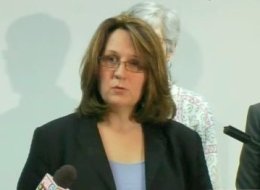
Labels:
election fraud,
election tampering,
open elections,
open source,
recall,
recount,
voter fraud
Subscribe to:
Comments (Atom)


